


Saws have been used at construction sites for decades to ensure accuracy while cutting different materials. With advancements in technology, these saws have been converted into electric-powered saws.
Now, a wide variety of saws, including electric, manual, handheld, and stationary, have been introduced in the market with special features to perform various tasks. This wide range of saws reduces human efforts and allows them to focus mainly on the preciseness and perfection of the shapes while cutting.
Although this increasing diversity of saws assists humans in doing more work in less time, it makes it difficult to choose which type of saw is best suited for their work. In this article, we will discuss in detail what electric handheld saws are, their types, and how to choose the best saw according to the work type.
What Are Electric Handheld Saws?
Electric handheld saws are electricity-powered, portable saws (sometimes mounted to stationary surfaces for straight cuts) that offer easy-to-use cutting of tough objects with manual handling. These types of saws are used for all types of projects, i.e., cutting of wood, metals, concrete, asphalt, etc., and assist users in performing their tasks by themselves.
Types of HandHeld Electric Saw
Here is a detailed discussion about different types of handheld power saws. It will help you understand the structure and function of different saws and their use in different jobs.
1. Circular Saw
Circular saws, also known as buzz saws, are the most common types of handheld electric saws due to their wide range of applications, including from your housework to carpentry. These saws are available in both corded and cordless forms.
They operate with a rotating saw blade that cuts the material with its rotatory motion and is used to cut in straight lines. One reason that makes these saws more comfortable to use is that they ensure safety with their encased blades.
2. Cut off Saw

Cut-off saws are also known by multiple names, including chop and concrete saws. Because their blades do not have teeth, they are also famous as abrasive saws. This is the largest portable saw, employed for cutting in straight lines rather than curves.
Cut-off or abrasive saws come with various types of blades, i.e., diamond blades, that are used to cut different substances, including metals and manosry.
3. Jigsaw
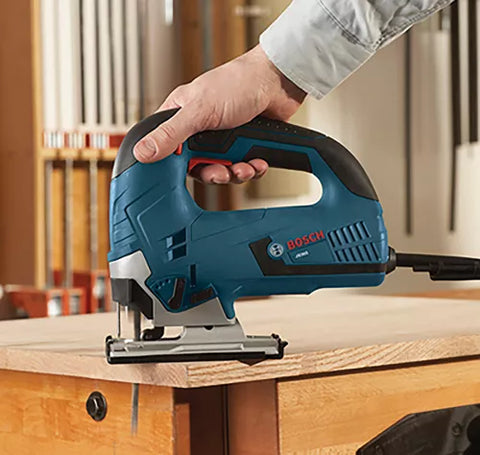
Jigsaws consist of thin and short blades that can cut different types of objects but are usually not employed for heavy work. They come in both corded and cordless types, increasing their versatility. Another factor that increases the importance of these saws is that they can also be utilized to cut straight, curved, and irregular lines.
Unlike circular saws, jigsaws cut the surfaces with up and down motion at a specialized speed. Their easy-to-use application makes them the best choice for house projects.
4. Rotary Saw

Rotary saws have circular blades (known as rotary tools) and are widely used to cut the sides of different materials to make an outline or design. In their function, they resemble more power drills than other saws.
Moreover, rotary saws cut the surfaces without making a pilot hole (holes made in the surface before cutting them) by directly penetrating the surface. Due to this unique feature, this type of saw is helpful for firefighters who need a forced entrance.
5. Chain Saw

Chainsaws are named so because they contain a spinning chain with pointed teeth. This type of handheld saw is mostly used to make shapes, trim, and cut larger surfaces. Chainsaws are available in a larger variety, both electric and gas-powered. Furthermore, their electric forms may also be corded or cordless.
However, electric-powered saws are not useful for cutting larger and heavier things, i.e., big trees like gas-powered saws. But they are more helpful as they can be used without a direct supply of electricity and gas with a charging capability. They are also environmentally friendly and do not make a noise like gas-powered chainsaws.
6. Reciprocating Saw

Reciprocating saws help to cut a wide variety of materials. These saws are strong enough to cut nails present in the woods or a wall. But for this purpose, you need a strong hold on its handle and apply force.
Due to their back-and-forth movements while cutting, they resemble jigsaws in their application. These saws are easy to use and safe in their application, but a little practice increases the effectiveness of their work. Moreover, they are best for demolition use and making curved cuts.
7. Track Saw

Track saws are one of the most cost-effective saws with portable advantage. This type of saw is best suited for a variety of cuts, including straight, cross cuts, rip cuts, and bevel cuts. Just like circular saws, these saws also ensure safety with covered blades.
A track saw features a guide rail that helps align the circular blade with the object you want to cut. The guide rail ensures the saw stays on track, and the rotating blade makes a precise, straight cut. Due to this unique technique, these saws are most useful for making straight, parallel, and flawless cuts each time.
8. Scroll Saw

If you want to make perfect and precise curve cuts, no other than a scroll saw can help you. Scroll saws are famous due to their fine blades, as they are very thin but sharp in texture. Therefore, these saws are used most of the time to make precise and detailed patterns and designs.
However, they are not portable and remain in the same place. You have to take the object to a saw for accurate cuts.
9. Band Saws

If you are looking for an instrument that makes fine and precise curve cuts in various types of substances, you can employ band saws. This saw is made up of a fine band of metal teeth that is running on two wheels. The whole system is working with the help of a pulley.
These are similar to jigsaws in their work but are more easy to use due to their stationary position. They are also available in portable and cordless forms but do not offer as effective and variable functions as stationary band saws.
Choosing the Suitable Saw for Your Project
Multiple types of saws have been introduced, including handheld, electric, and manual saws, to facilitate construction workers. Due to differences in formation and working, these saws perform unique tasks and are suitable for different projects.
Out of this diverse variety of saws, choosing a saw type that is suitable for your project is important to unlock its full potential. For this purpose, you need complete knowledge about various saw types and their functions.
To choose the best saw perfect for your work type, first understand the nature of your work and then match its requirements with the functions a saw can perform. This way, you can decide which saw will be the best for your project.
Final Words
Electric handheld saws offer convenience with their perfect application and easy handling. A wide variety of saws are available to facilitate its users with multiple types of work. But choosing the right saw for your work is crucial to performing it perfectly.
If you want to know which type of saw is best suited for your work type, you must know about the work capabilities and specialties of different types of saws so that you can choose a saw that matches your requirements.
FAQs
Which type of handheld saw performs better than others?
Types of saws usually differ from each other based on their function and efficiency. A saw with more metal teeth performs better than a saw with fewer teeth.
Which saw is easiest to use?
Circular saws are the easiest-to-use saws and offer great versatility in their function.
What are the advantages of using electric saws?
Electric saws reduce human effort, provide a fine-cutting surface, and do not make noise.
What are the two basic types of electric-powered saws?
There are two types of electric saws: corded and cordless. Corded saws need a nearby electric source for direct supply, while cordless saws are rechargeable and can work without a direct supply of electricity.


